











By Aresh Saqib, founder of Sakoon Nutrition · Updated 27 October 2026
Quick answer: In short clinical trials, healthy adults have generally tolerated black seed oil at the amounts studied, and an upset stomach is the most common complaint. It can add to the effect of blood sugar and blood pressure medicines, and it may change how the body handles some drugs, including the blood thinner warfarin. Skip it during pregnancy and breastfeeding unless your doctor says yes, tell your surgeon before any operation, and check with your doctor first if you take any regular medicine.
I sell black seed products, so I have a reason to make this page sound reassuring. I have tried to do the opposite and give you the cautions in full.
How much black seed oil is safe to take?
There is no official daily limit, so the best guide is the amounts used in clinical trials. A review of those trials by Tavakkoli and colleagues describes:
- 5 mL of oil a day (about one teaspoon) for eight weeks in healthy volunteers, with no notable liver, kidney or stomach side effects reported.
- 1 to 3 g of black seed a day for up to three months in adults with type 2 diabetes, without harm to liver or kidney function.
- Seed extract at 200 to 400 mg a day for two months in adults with mildly raised blood pressure, with no complications reported.
Most trials ran for weeks or a few months. Long-term data are thin. Products also vary in strength, so stick to the serving size on your label and don't add a second black seed product on top.
What are the side effects of black seed oil?
Stomach upset. In one trial where adults with indigestion took 5 mL of oil a day, some had nausea, bloating and a burning feeling. Taking it with food may help.
Low blood sugar and stomach pain. One trial using black seed oil capsules reported cases of upper stomach pain and low blood sugar.
Liver and kidney markers. A 2021 review by Hannan and colleagues notes a slight rise in liver and kidney enzyme markers in one study using the oil and crushed seeds. High doses damaged the liver and kidneys in rats, according to Memorial Sloan Kettering Cancer Center (MSK), which adds that human data are lacking.
Skin reactions. MSK lists allergic contact dermatitis, a skin rash, after people put the pure oil on their skin. One person needed steroid treatment.
Can black seed oil interact with medications?
Yes, it can, and this is the section to take most seriously.
Blood thinners
MSK reports that thymoquinone, the main active compound in black seed, was shown to inhibit warfarin activity. How much that matters in real patients is not known. If you take warfarin or another blood thinner, don't start black seed oil without your doctor, and expect them to want extra blood tests.
Diabetes medicines
Researchers have studied black seed for its effect on blood sugar. The Tavakkoli review lists blood-sugar lowering among its best-studied effects, and low blood sugar has been reported as a side effect. On top of insulin or other diabetes medicine, that could push your sugar too low. Ask your doctor first and check your levels more often if they say yes.
Blood pressure medicines
A 2023 analysis of clinical trials by Kavyani and colleagues found black seed lowered systolic blood pressure by about 3 mmHg and diastolic by about 2.7 mmHg on average. Small, but it adds to what your medicine already does.
Drugs processed by the liver
MSK notes that black seed inhibits two liver enzymes, CYP2D6 and CYP3A4, which break down many common medicines. That may change how much of those drugs stays in your body and raise the risk of their side effects. MSK says the real-world effect is not known. The Hannan review also describes animal studies where thymoquinone changed blood levels of cyclosporine, a transplant drug, and phenytoin, a seizure medicine.
Sedatives and sleep medicines
A review by Javidi and colleagues describes calming and anti-seizure effects in mostly animal studies, with few human reports. The human evidence is thin either way, so if you take sedatives, sleep medicine or anxiety medicine, ask before combining them.
Is black seed oil safe during pregnancy or breastfeeding?
We don't know, and that is the honest answer. There are not enough human studies. The National Center for Complementary and Integrative Health (NCCIH) notes that many supplements have never been tested in pregnant women, nursing mothers or children. In one animal study described in the Hannan review, high injected doses of thymoquinone harmed pregnant rats and their embryos, while a lower dose did not. If you are pregnant, trying to get pregnant or breastfeeding, skip black seed supplements unless your doctor says yes.
Should you stop black seed oil before surgery?
Tell your surgeon and anesthesia team about it well ahead of time. NCCIH warns that some supplements may raise the risk of bleeding or change how you respond to anesthesia. With black seed, the effects on blood sugar, blood pressure and warfarin are the reasons to raise it. Ask them exactly when to stop.
Who should skip black seed oil or ask a doctor first?
- Anyone pregnant, trying to get pregnant or breastfeeding.
- Children, unless a pediatrician says otherwise.
- Anyone taking blood thinners, diabetes medicine, blood pressure medicine, sedatives or sleep medicine, or transplant drugs such as cyclosporine.
- Anyone with liver or kidney disease.
- Anyone with surgery coming up.
- Anyone who has had a skin or allergic reaction to black seed before.
How can you take black seed oil more safely?
- Start with the serving on the label, not more.
- Take it with food.
- Use one black seed product at a time. Gummies, capsules and oil all count toward the same total.
- Bring the bottle to your next appointment so your doctor can see exactly what is in it.
- Stop and get medical help right away if you get a rash, swelling or trouble breathing.
Where Sakoon fits
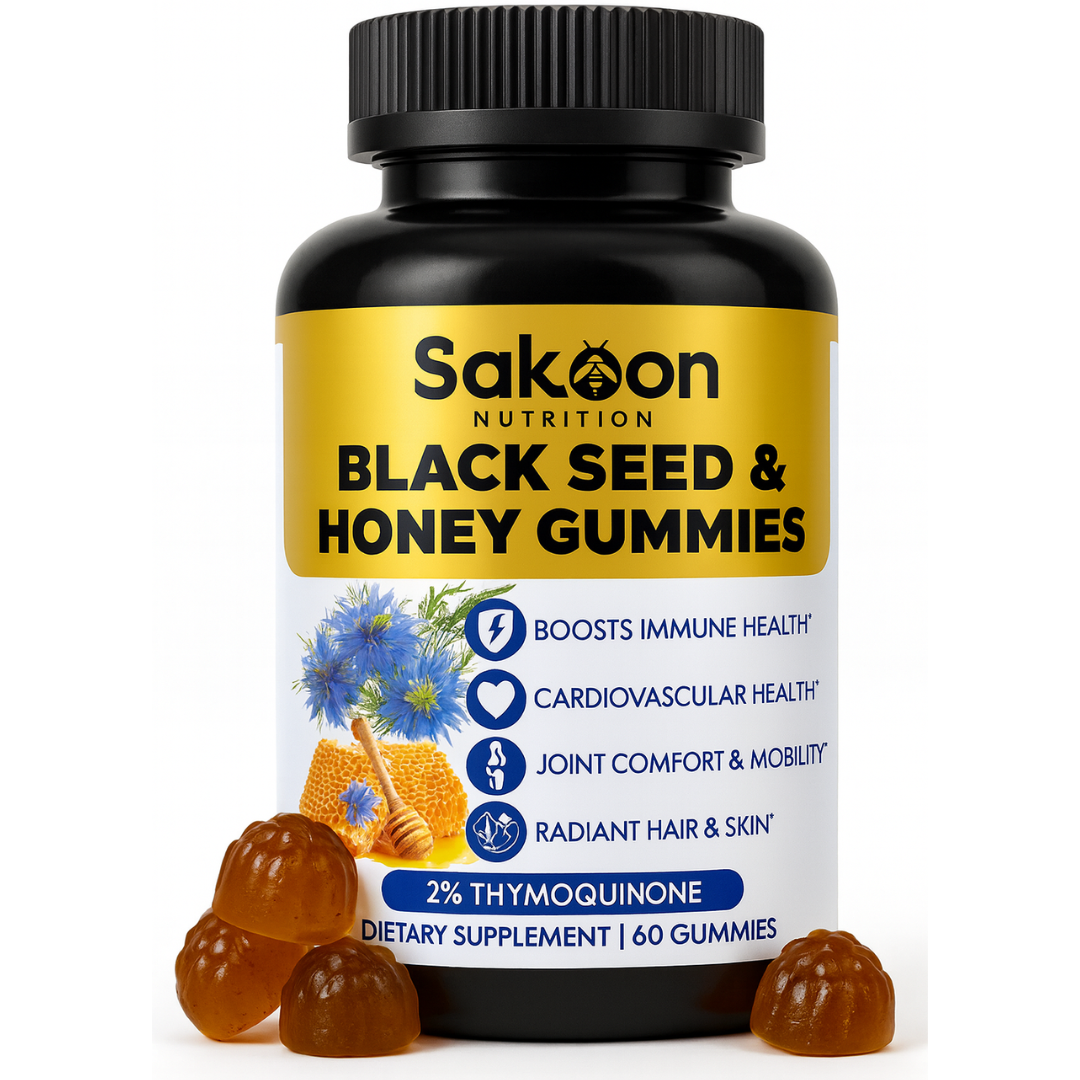
Our two black seed products sit well below the 5 mL a day used in some trials. The Black Seed & Honey Gummies have 200 mg of black cumin seed oil per two gummies. The Black Seed Oil & Manuka Honey Capsules have 1,000 mg per two capsules. Both labels say to take them with food and not to go over the serving size. Lower amounts don't remove the interaction risks above, so if you take any regular medicine, show the label to your doctor first. To compare formats and doses, see our guide to black seed oil gummies vs capsules vs liquid oil.
Frequently asked questions
Can I take black seed oil every day?
Most trials gave it daily for weeks to a few months without serious side effects. There is little data beyond that, so check in with your doctor if you plan to take it long term.
Is black seed oil bad for your liver?
Trials at the studied amounts mostly found no notable change in liver markers, though one study saw a slight rise. High doses harmed the liver in rats. If you have liver disease, ask your doctor first.
Can black seed oil cause low blood sugar?
It has been reported in a trial. The risk is higher if you also take diabetes medicine.
Can I put black seed oil on my skin?
Some people have had allergic skin rashes from the pure oil. Try a small patch first, and stop if your skin reacts.
Can I take black seed oil with my blood pressure pills?
Ask your doctor first. Black seed can lower blood pressure a little, which adds to what your pills already do.
Sources
- Tavakkoli A, et al. Review on Clinical Trials of Black Seed (Nigella sativa) and Its Active Constituent, Thymoquinone. Journal of Pharmacopuncture, 2017. PMC5633670
- Hannan MA, et al. Black Cumin (Nigella sativa L.): A Comprehensive Review on Phytochemistry, Health Benefits, Molecular Pharmacology, and Safety. Nutrients, 2021. PMC8225153
- Memorial Sloan Kettering Cancer Center. Nigella sativa (About Herbs). mskcc.org
- Kavyani Z, et al. Antihypertensive effects of Nigella sativa supplementation: An updated systematic review and meta-analysis of randomized controlled trials. Phytotherapy Research, 2023. PubMed 37341696
- Javidi S, Razavi BM, Hosseinzadeh H. A review of Neuropharmacology Effects of Nigella sativa and Its Main Component, Thymoquinone. Phytotherapy Research, 2016. PubMed 27169925
- National Center for Complementary and Integrative Health. Using Dietary Supplements Wisely. nccih.nih.gov
These statements have not been evaluated by the Food and Drug Administration. This product is not intended to diagnose, treat, cure, or prevent any disease.